What changed?
Notice the resource gained, the space occupied or the card removed. A good explanation connects the action to an observable change in the game state.
THE MECHANIC BENCH / AUSTRALIA
Board-game mechanics become clearer when you can touch the decision. Start with a tiny experiment, then pull the idea apart.
Enter the placement lab ↗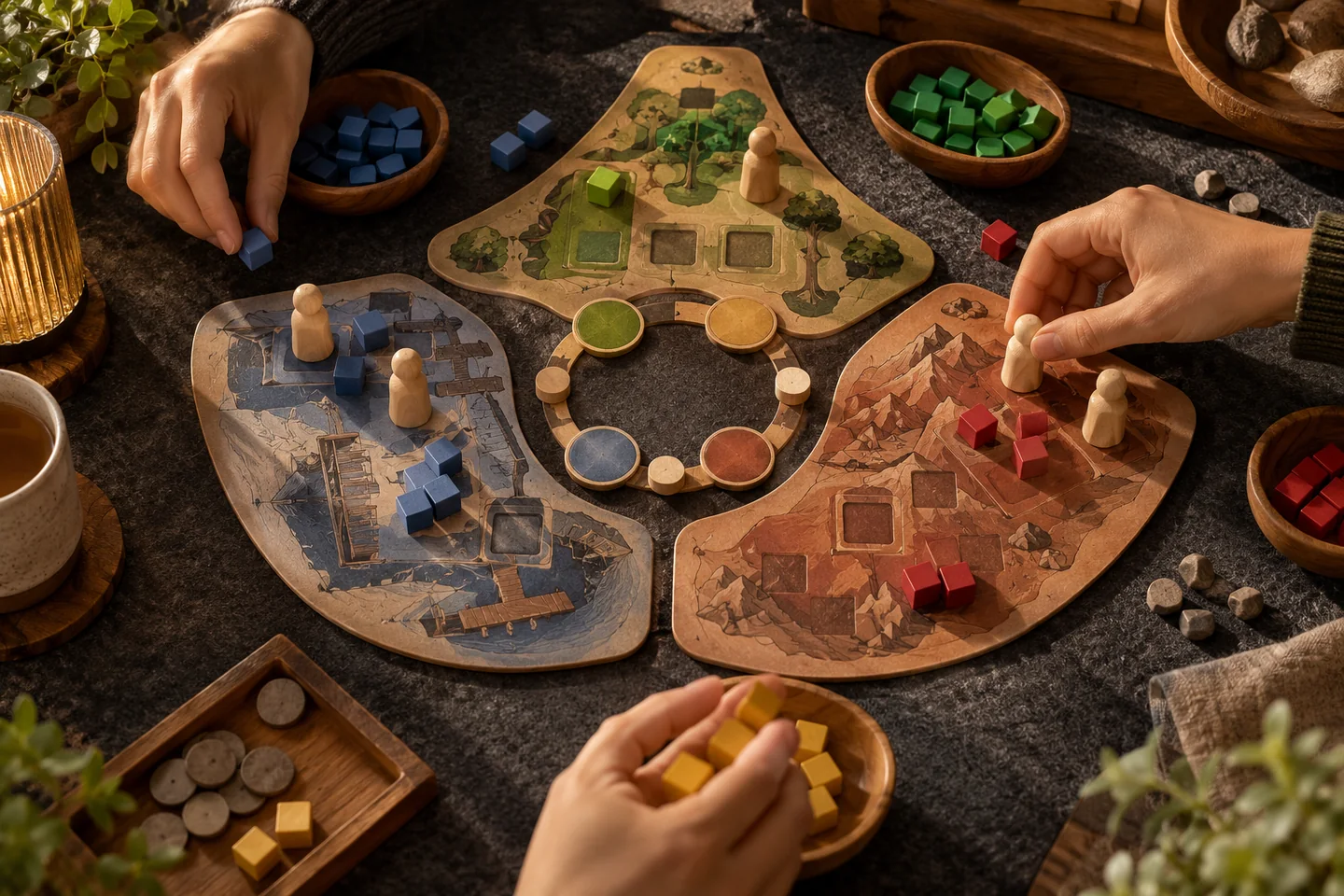
EXPERIMENT 00 / ONE CHOICE
You have no resources. Where would you begin?
Choose a space to reveal its immediate consequence.
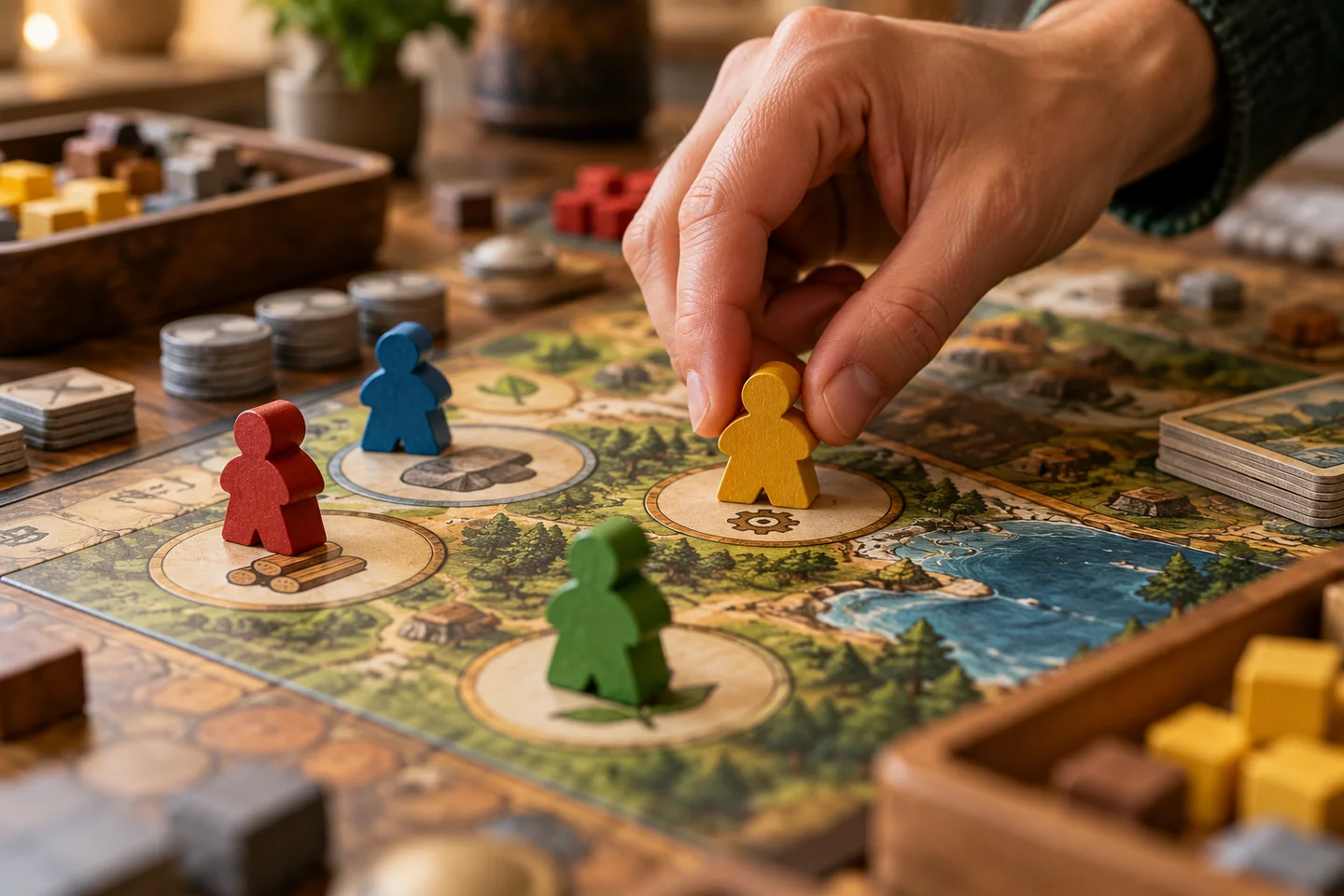
Read a rule in isolation and it can feel abstract. Place a worker, lose access to a space and watch your next choice change. That small sequence makes the mechanism visible.
EXPERIMENT 01 / WORKER PLACEMENT
In our original two-player prototype, a space can hold one worker each round. Your choice gains something for you and removes an option for the other player.
Four rounds are enough to observe that tension. No commercial game rules are reproduced.
Play the four-round prototypeWHAT THE PROTOTYPE USES
EXPERIMENT 02 / DRAFTING
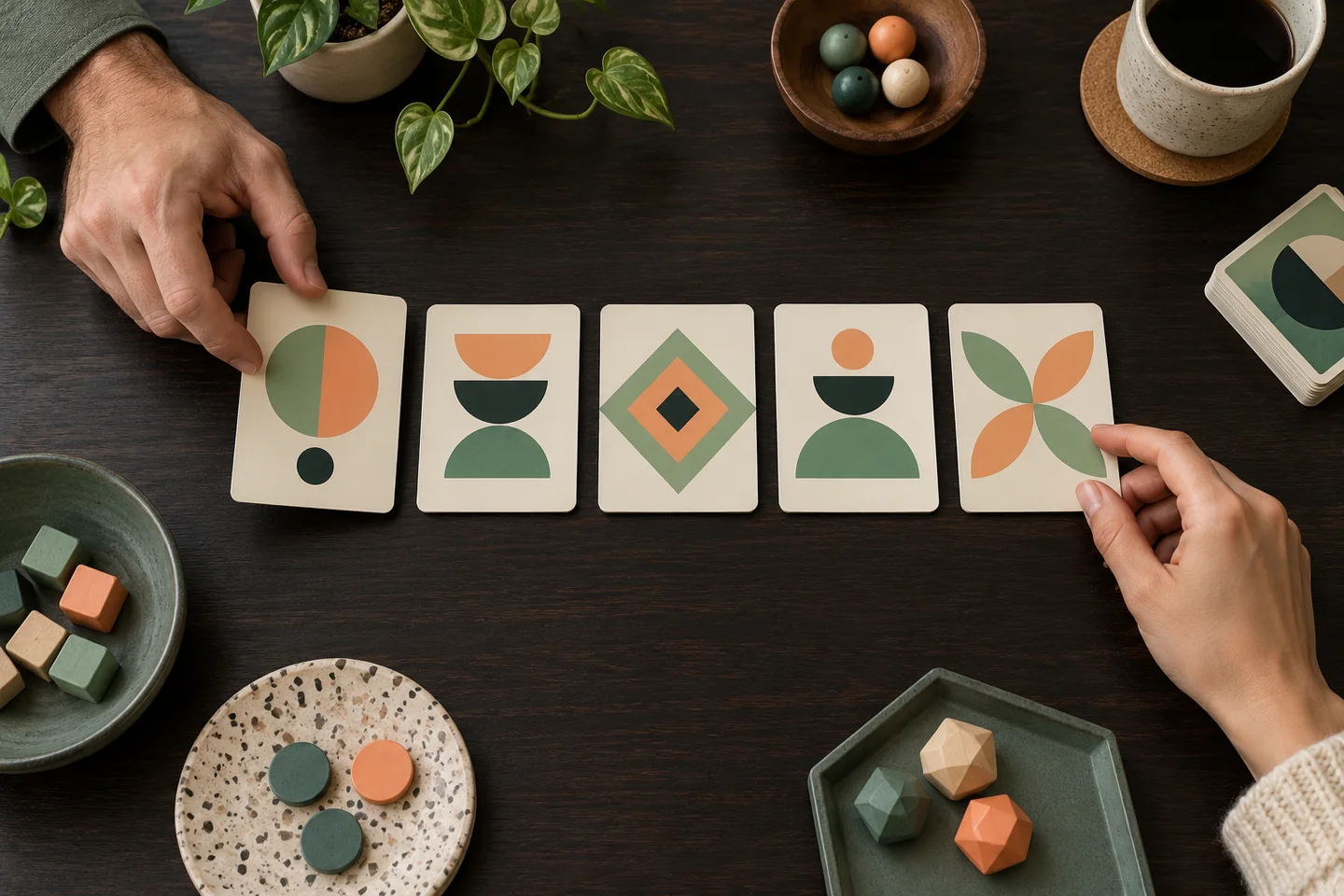
Drafting asks you to select from a limited set. In some games, the options left behind become another player’s opportunity. The interesting part is the changing menu.
Look up drafting ↗Notice the resource gained, the space occupied or the card removed. A good explanation connects the action to an observable change in the game state.
Look at the options available afterwards. Some decisions are interesting because of what they prepare; others matter because they close a door.
EXPERIMENT 03 / DECK BUILDING
Adding a card can change the hands you might draw later. The immediate purchase and its delayed appearance are separate parts of the mechanism.
Compare that delayed effect with a drafting decision that changes the available row straight away.
Compare the decision shapes ↗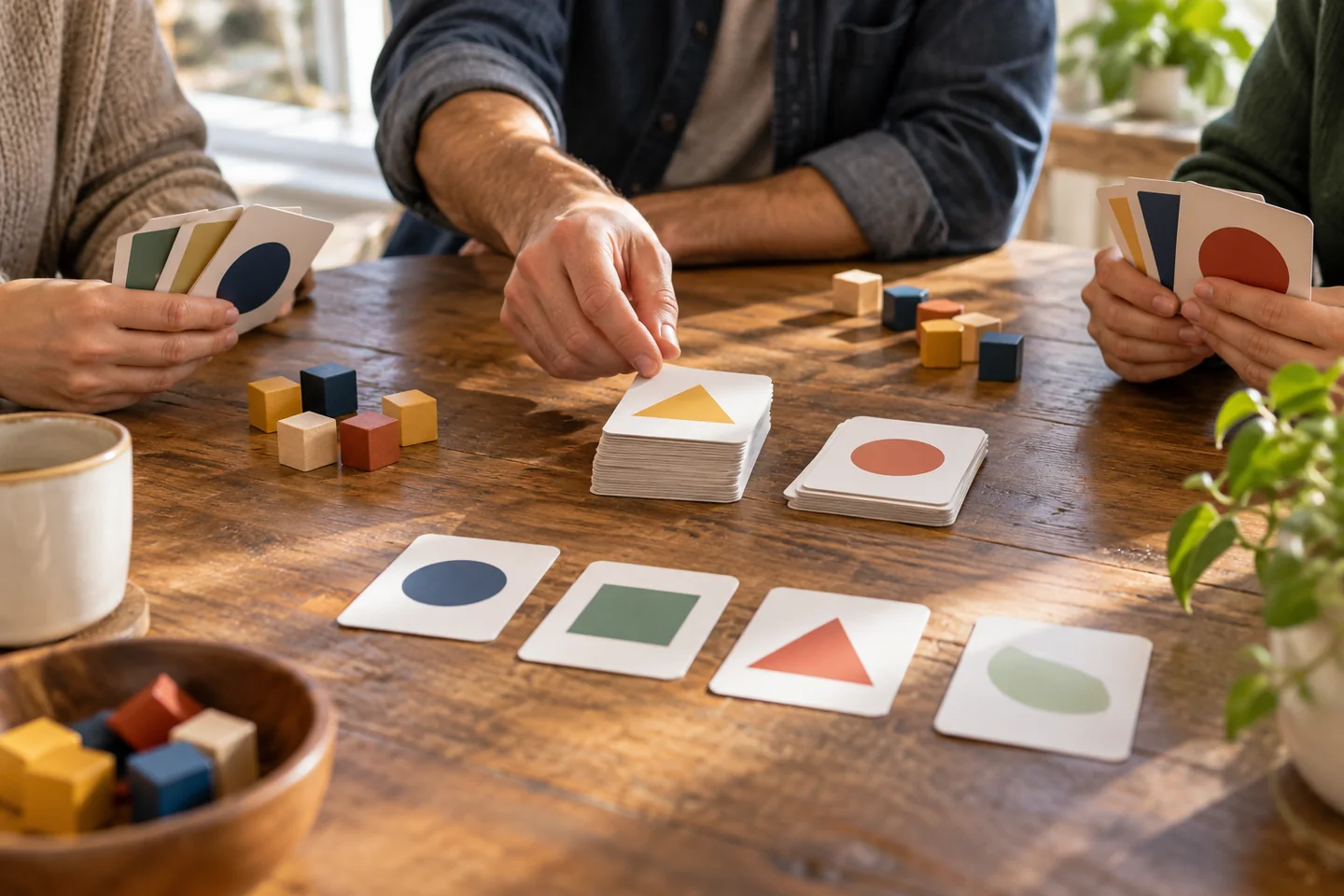
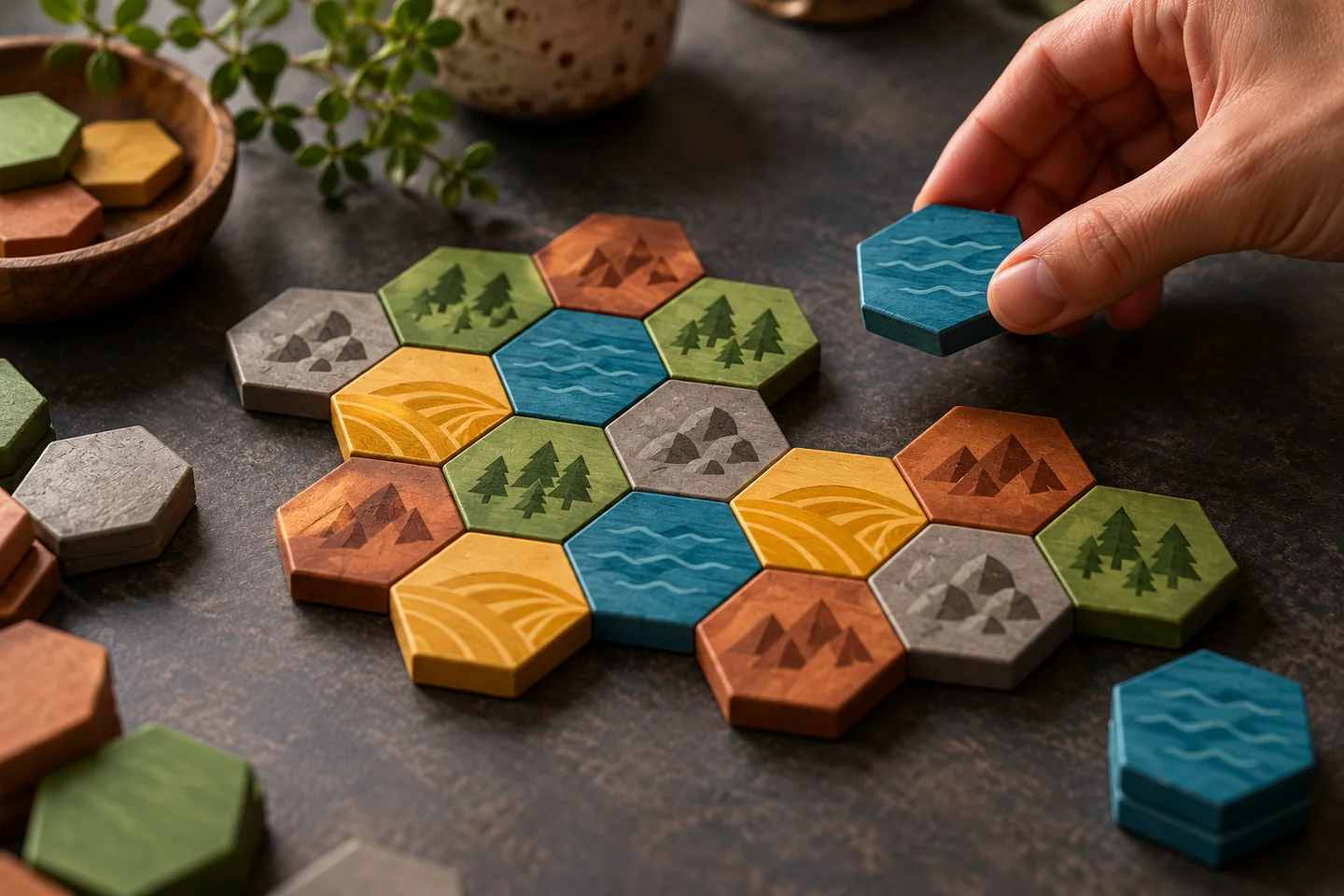
A tile can connect, surround, block or extend. The spatial relationship is often the clearest thing to demonstrate before discussing points.
READ THE COMPONENTS
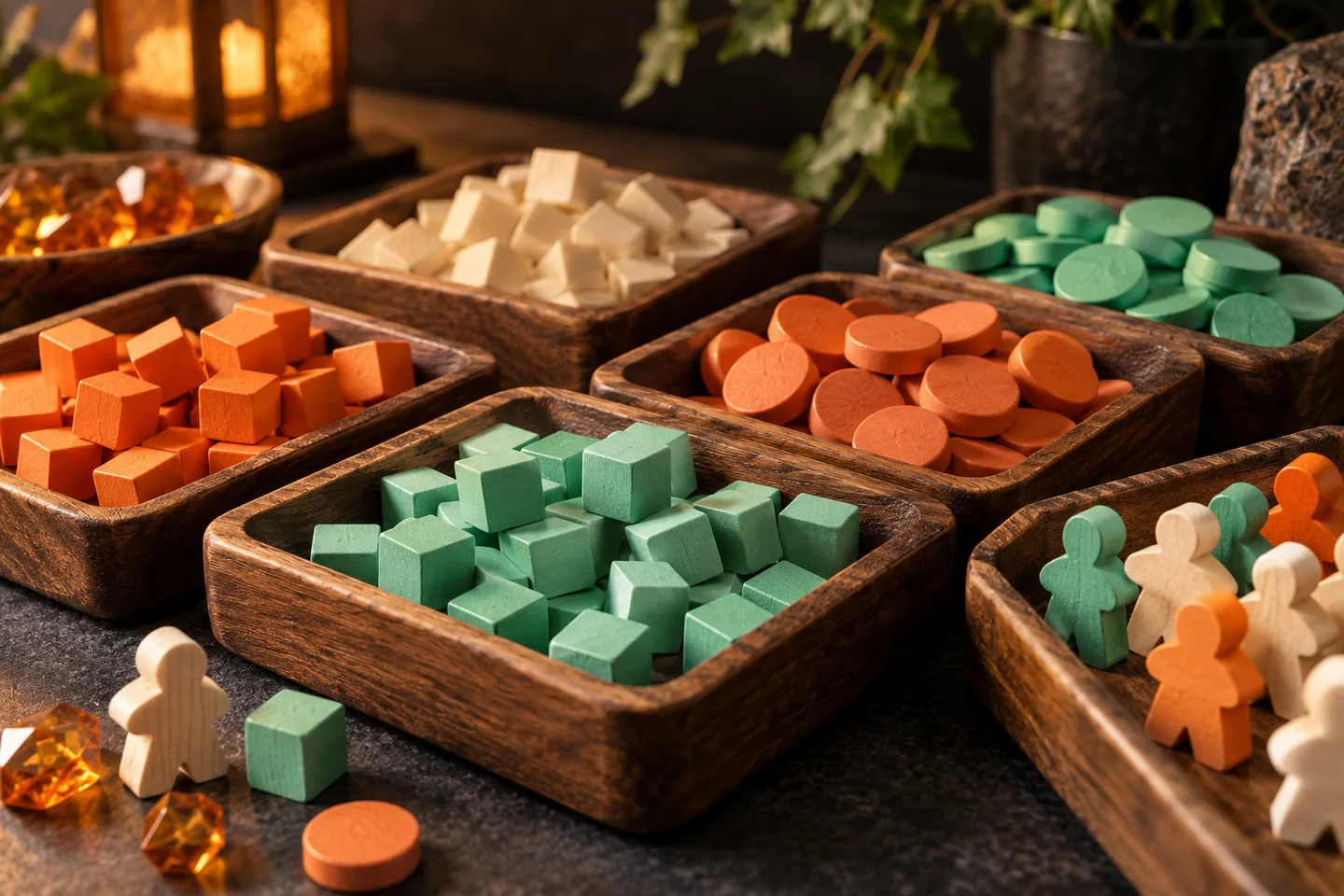
The same physical piece can be currency, an action marker or a score. Explain its role before asking a learner to optimise how many they have.
THE COMPARISON WORKBENCH
Select two mechanics and compare what a player chooses, when the effect appears and what a teacher should show first.
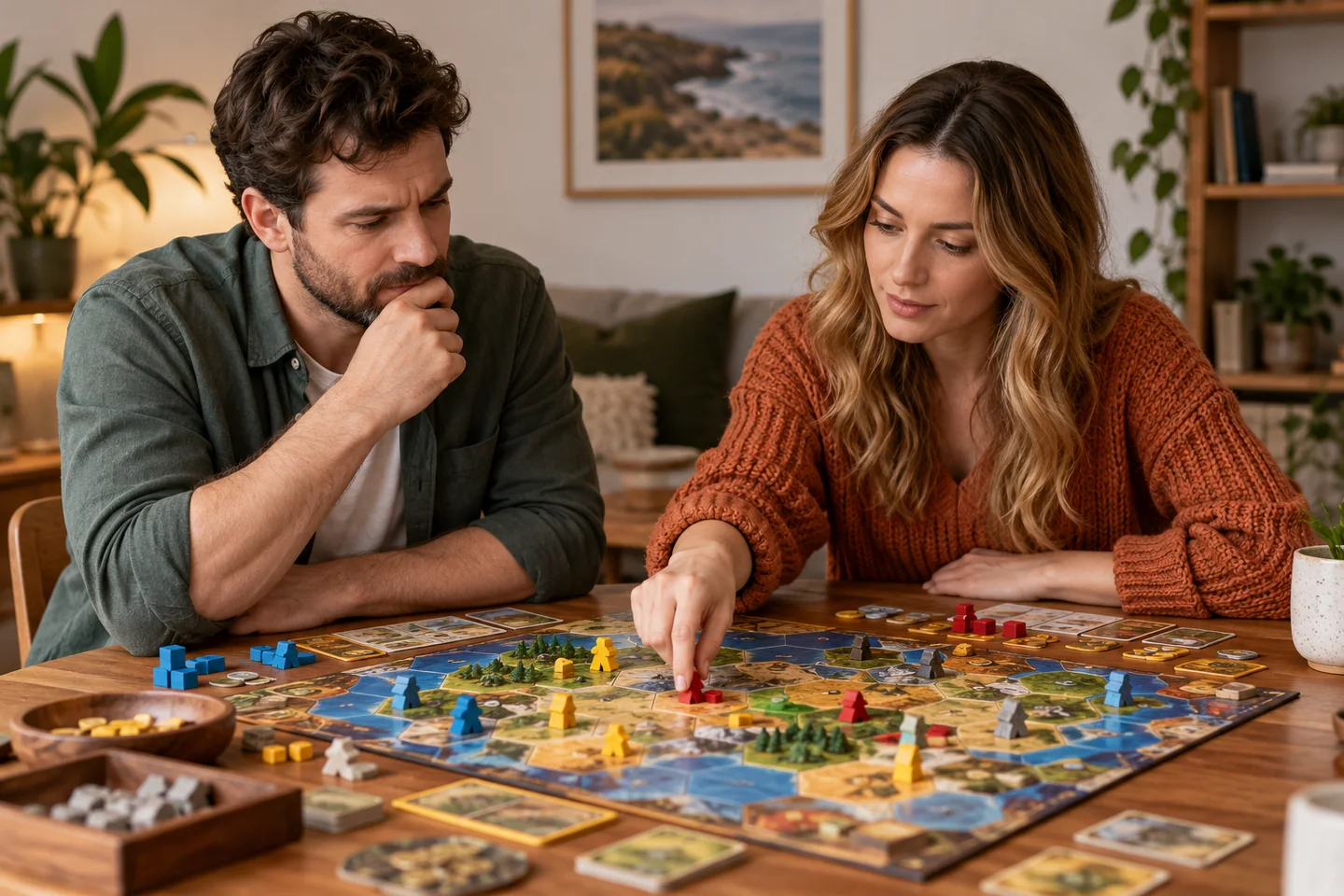
A DECISION BELONGS TO A PERSON
Silence can mean a player is exploring the possibilities. Ask whether they would like a rules reminder before offering strategic advice.
In a learning game, describing the available actions often helps more than pointing to the move you would choose.
TEACH THE MECHANISM
Build the smallest example that contains the rule. Show it, reset it and invite the learner to change one choice.
Use the teaching sequence ↗
THE MECHANIC INDEX
Search six focused definitions, including action selection, drafting and set collection. Each entry explains the choice, a teaching example and a common misunderstanding.
Search the index ↗
NOTES FROM THE WORKBENCH
Change one rule at a time when exploring a prototype. If turn order, scoring and resource supply all move together, it becomes difficult to tell what caused the difference.
Our lab keeps its rules fixed so you can compare decisions within the same small system.
No. The placement lab is a small original educational prototype. It demonstrates exclusive action spaces and resource trade-offs without promising the balance or depth of a published product.
No. The lab keeps its state in the open page. Reloading or resetting starts again. No player account or score history is created.
Usually not. Published games often combine several mechanisms, along with theme, pacing and different kinds of information.
AFTER THE LAST ROUND
Ask which choice changed the next turn. Compare the option taken with the one left open. The explanation can be more interesting than the final score.
About this independent project ↗
Suggest a clearer example or report a problem with an experiment.